


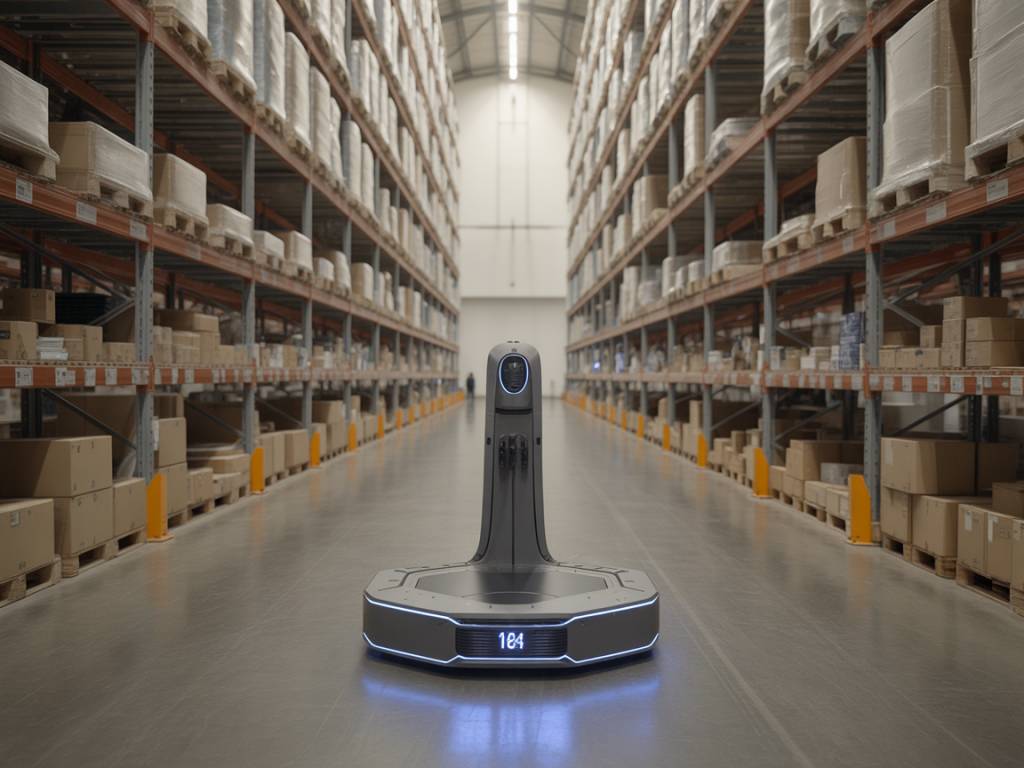
Understanding Biomimicry in Warehouse Robotics
As supply chain operations become increasingly complex, warehouse robotics is undergoing a quiet revolution. A growing number of technologists and designers are turning to one unlikely source for intelligent automation ideas: nature. This approach, known as biomimicry, draws inspiration from biological systems to develop robotic solutions that mirror natural efficiency. In logistics and supply chain management, biomimicry in warehouse robotics is beginning to unlock new possibilities in automation, sustainability, and resilience.
In simple terms, biomimicry is the practice of emulating strategies and patterns found in nature to solve human challenges. When applied to warehouse automation, it may involve designing robots that mimic the locomotive patterns of insects, the swarm behavior of ants, or the adaptability of an octopus. These nature-inspired solutions are not only elegant—they’re often more efficient and, in some cases, more cost-effective than traditional mechanical approaches.
The Role of Nature-Inspired Design in Intelligent Warehouse Automation
Modern warehouses thrive on precision, speed, and adaptability. As e-commerce continues to push the boundaries of distribution and logistics, efficient warehouse automation is no longer a luxury—it’s a necessity. Biomimicry plays a transformative role in this domain by offering blueprints from creatures that have evolved optimization over millennia.
By analyzing how birds flock, how fish navigate, or how bees communicate to coordinate group tasks, roboticists develop algorithms that empower autonomous warehouse robots to collaborate and move seamlessly within a facility. These bio-inspired systems are not just programmed—they are adaptive, resilient to change, and capable of self-correction.
Biomimicry-Inspired Locomotion and Navigation Systems
One of the most visible applications of biomimicry in robotics lies in robot mobility. Logistical robots must move quickly and effectively across vast storage areas, often while avoiding obstacles and coordinating with other units.
Examples of biomimetic movement in warehouse robots include:
- Legged locomotion based on insects: Six-legged robots inspired by ants or beetles allow navigation over uneven terrain—useful in warehouses with varying floor levels or temporary obstructions.
- Snake-like continuum robots: Inspired by serpents, these robots can twist through narrow spaces or beneath fixed shelving, expanding their reach in vertical storage systems.
- Hovering and aerial drones: Mimicking hummingbirds or bats, these warehouse drones are designed for inventory scanning or rapid transportation of small parcels within large fulfillment centers.
Such designs significantly reduce the energy output needed for navigation while increasing agility and situational awareness within dynamic environments.
Swarm Robotics and Self-Organizing Systems
In natural ecosystems, swarms play a crucial logistical role. Ant colonies, termite mounds, and bee hives function through decentralized yet highly organized systems. In the world of warehouse robotics, a similar approach is used to develop coordinated fleets.
Swarm robotics focuses on the design of many small, simple robots that work together based on shared algorithms rather than centralized control. These swarms can complete complex tasks more efficiently than a handful of large robots, especially for activities such as picking, sorting, or transporting goods in a distributed layout.
The benefits of swarm-based warehouse robotics include:
- Increased system resilience—if one robot fails, others adjust autonomously
- Greater flexibility and scalability across warehouse operations
- Real-time adaptation to traffic, blockages, or sudden changes in workload
Systems resembling ant colonies or bee communication protocols are leading the development of next-generation warehouse management strategies. They’re particularly useful in high-density order fulfillment centers operated by companies in the e-commerce and retail sectors.
Material Handling Inspired by Biological Appendages
Another area where biological systems have influenced robotics involves manipulation and grip. In a warehouse setting, material handling robots must be soft yet firm, accurate yet adaptable. By studying how octopuses manipulate objects with precision or how a gecko walks vertically using suction, engineers can replicate these traits in robotic grippers.
Some innovations currently in use include:
- Soft robotic grippers: Inspired by jellyfish or tentacles, these can handle delicate or irregularly shaped items like produce or pharmaceuticals.
- Sticky-foot adhesion systems: Derived from gecko-inspired microstructures that provide effective grip without pressure or damage to surfaces.
- Adaptive grasping with shape-memory materials: These materials bend and return, mimicking muscle memory found in biological systems for flexible storage and retrieval.
These systems reduce human error, improve safety, and help warehouses cope with SKU diversity without needing specialized tooling for each type of product.
Energy Efficiency and Sustainability through Biomimetic Design
Warehouse robotics isn’t just about speed—it’s also about sustainability. Nature operates with minimal waste, a principle that can guide the design of greener robots. Biomimicry emphasizes closed-loop processes like those found in organic ecosystems where feedback and minimal resource use are the norm.
Nature-inspired warehouse robots often utilize:
- Low-energy actuation mechanisms such as elastic tendons or air muscles
- Behavior-based energy optimization, regulating movement to conserve battery life
- Modular designs that resemble natural organisms’ regenerative processes
These characteristics reduce the carbon footprint of automated fulfillments and extend robot longevity—key factors in lowering the total cost of ownership (TCO). They also align with the growing consumer demand for sustainable logistics and environmentally conscious fulfillment practices.
Challenges in Implementing Biomimicry in Robotic Warehouses
Despite its advantages, incorporating biomimetic principles into warehouse logistics automation presents technical and systemic challenges. Biological inspiration doesn’t always translate easily into mechanical form. Some living organisms rely on materials and structures difficult or expensive to replicate at scale.
Additional challenges include:
- Complex programming for decentralized decision-making among robot swarms
- Difficulty in modeling fluid and adaptive movements within rigid industrial settings
- Integration with existing WMS (Warehouse Management Systems) and fulfillment software
Furthermore, real-world warehouse conditions can be less controlled than laboratory simulations—making reliability and robustness key issues in biomimetic deployments.
The Future of Biomimicry in Warehouse Logistics
As artificial intelligence, machine learning, and sensor technologies evolve, biomimicry in warehouse robotics is poised for wider adoption. Future systems may operate with greater autonomy, responding not just to orders, but to broader environmental signals—much like organisms in a biome.
Already, several companies are deploying prototypes or commercial units based on natural models. Startups are blending robotic material handling with cognitive mapping inspired by animal behavior. Larger logistics providers are investing in R&D to reduce waste and improve speed using swarm intelligence. As demand for next-gen warehouse automation technologies grows, biomimetic systems will play a critical role in shaping the future of logistics.
Nature has always been the original engineer. Now, as warehouses become smarter and more complex, it offers our most profound insight yet—with lessons millions of years in the making.