


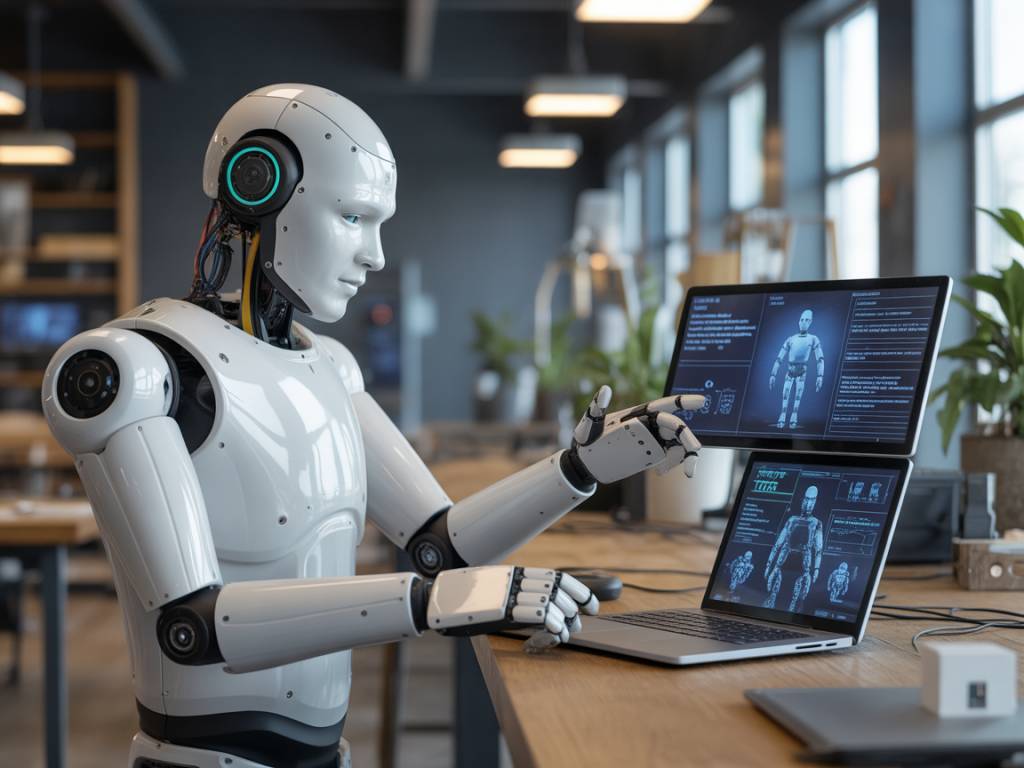
Digital twins and warehouse robots: how simulation is reshaping robotic system design
In modern logistics, digital twins and warehouse robots are increasingly deployed together. The combination is not just a technical trend; it is transforming how warehouse systems are designed, tested and optimized. By using advanced simulation and digital twin technology, companies can virtually prototype, validate and continuously improve automated and robotic warehouses before making heavy capital investments.
This article explores how digital twins are used for warehouse robots, which benefits they deliver for design and operations, which technologies are involved, and how logistics and supply chain teams can start building a simulation-driven approach.
What is a digital twin in a warehouse robotics context?
A digital twin is a dynamic, virtual representation of a physical system. In the context of warehouse robots, it mirrors the behavior of autonomous mobile robots (AMRs), automated storage and retrieval systems (AS/RS), conveyor systems, picking stations and even human operators.
Unlike a static 3D model or a simple simulation, a digital twin is fed by real-time data from sensors, warehouse management systems (WMS) and robot controllers. It can simulate material flows, robot trajectories, inventory movements and order processing under realistic constraints.
In a robotic warehouse, a robust digital twin typically includes:
- A detailed 3D model of the warehouse layout, including racks, docks, workstations and safety areas.
- Behavioral models of robots, conveyors, shuttles and lifts, reflecting their acceleration, speed, payload and charging needs.
- Order and inventory models representing SKU characteristics, demand patterns, order lines and batching logic.
- Integration with WMS, WES (Warehouse Execution System) and robot fleet managers to mirror actual control logic.
By aligning the virtual model with the physical warehouse, operators can conduct sophisticated “what-if” analyses and optimize complex robotic interactions.
From static simulation to living digital twins for warehouse robots
Warehouse simulation is not new. Discrete event simulation and 2D material flow models have been used for decades to size conveyor systems and design manual processes. What is changing now is the fusion of these methods with 3D models, real-time data and the cyber-physical capabilities of autonomous warehouse robots.
Modern digital twins for logistics and intralogistics bring several innovations compared with traditional simulation:
- Real-time synchronization: telemetry from robots, IoT sensors, PLCs and the WMS continuously updates the digital model, closing the loop between the shop floor and the virtual environment.
- High-fidelity physics and kinematics: advanced engines model robot dynamics, collisions, traffic management and safety distances more accurately than earlier abstract flow models.
- Scalable cloud computing: complex scenarios with thousands of robots and millions of order lines can be run in parallel on cloud infrastructure.
- Integration with AI and optimization: machine learning and optimization algorithms are tested and trained inside the digital twin before being deployed in the live warehouse.
The result is a living, evolving representation of the warehouse automation system, from inbound to outbound, that logistics teams can use throughout the lifecycle of the facility.
Designing robotic warehouses with digital twins: de-risking investment
One of the strongest use cases for digital twins in warehouse robotics is during the design and engineering phase. Robotic automation projects represent large capital expenditures and long payback periods. Mistakes in dimensioning or configuration can be extremely costly.
By using digital twins early, integrators and warehouse owners can:
- Evaluate multiple concepts: goods-to-person systems, shuttle-based AS/RS, mobile robot fleets or hybrid solutions can be compared with quantitative KPIs such as throughput, order cycle time or labor productivity.
- Right-size the robotic fleet: simulation helps determine the optimal number of robots, buffer locations and charging stations to meet service level targets without unnecessary overcapacity.
- Test peak and seasonal scenarios: Black Friday, Christmas or unexpected demand spikes can be modeled with high accuracy, revealing bottlenecks in robotic picking or packing operations.
- Validate layout decisions: rack heights, aisle widths, cross-aisles, staging areas and workstation layouts can be optimized around robot traffic patterns and human-robot interaction.
- Simulate ramp-up phases: partial automation, progressive robot deployment and temporary process workarounds can be tested step by step.
For many e-commerce, retail and 3PL players, the ability to quantify the impact of various warehouse automation options with a digital twin is now a prerequisite for capital approval.
Digital twins for operational excellence in automated warehouses
The value of digital twins does not end at go-live. During everyday operations, the same simulation and modeling capabilities can be used to drive continuous improvement, maintenance, and real-time decision support.
Key applications of digital twins for robotic warehouse operations include:
- Real-time monitoring and diagnostics: a visual, 3D representation of robots, orders and inventory flows helps supervisors quickly identify congested zones, idle robots or blocked tasks.
- Predictive analysis: by projecting a few hours or days into the future, logistics managers can foresee backlog creation, capacity shortages and SLA breaches, then adjust labor or robot deployment.
- Scenario testing during operations: before changing picking strategies, slotting rules or order allocation logic, teams can evaluate the impact in the digital twin with minimal risk.
- Energy and charging optimization: simulation of charging patterns and robot utilization helps reduce energy costs and extend battery life.
- Maintenance planning: combining condition monitoring data and simulation, digital twins can estimate the impact of planned downtime for robots, conveyors or lifts and propose optimal maintenance windows.
In highly automated facilities, where downtime is very expensive, this proactive use of digital twins can significantly improve system reliability and overall equipment effectiveness (OEE).
Improving human–robot collaboration with simulation
Despite the rise of robotics and automation, humans remain central to warehouse operations. Pickers, packers, quality inspectors and technicians share the same space with cobots and mobile robots. Designing safe, ergonomic and efficient human–robot workflows is a major challenge.
Digital twins and simulation provide powerful tools to address the complexity of human–robot collaboration in intralogistics:
- Ergonomic analysis: virtual reality and motion capture integrated into the digital twin can simulate operator postures at picking stations or packing benches, helping reduce the risk of musculoskeletal disorders.
- Safety validation: safety envelopes, stopping curves and emergency procedures for robots can be tested in dozens of edge-case situations without exposing workers to real risks.
- Training and onboarding: operators can be trained in a virtual twin of the warehouse, learning to interact with robots, follow new processes and respond to incidents before entering the live environment.
- Workload balancing: combining human task modeling and robotic task queues allows managers to balance workloads more effectively between human-operated and automated stations.
This human-centered use of digital twins goes beyond technical optimization and supports a smoother adoption of robotics on the warehouse floor.
Core technologies behind digital twins for warehouse automation
Building a digital twin for an automated warehouse requires several technological components and software layers that must work together smoothly.
Common technology building blocks include:
- 3D modeling and CAD tools: used to create accurate representations of racks, conveyors, buildings and robots.
- Simulation engines: discrete event simulation, agent-based simulation and physics engines model flows, queues and robot movements.
- IoT and data integration: connectors and middleware aggregate sensor data, PLC signals, WMS transactions and robot telemetry into a unified data layer.
- AI and analytics platforms: used for demand forecasting, intelligent slotting, dynamic order batching and path optimization for robots.
- Cloud infrastructure and edge computing: ensures that complex digital twin calculations can run efficiently while maintaining low-latency control where needed.
Many industrial software vendors and robotics integrators now offer dedicated platforms for logistics digital twins, enabling supply chain teams to build and maintain their own models without writing low-level code.
Strategic benefits for supply chain and logistics leaders
For decision makers in supply chain, e-commerce fulfillment and third-party logistics, digital twins for warehouse robots are not just an engineering tool. They represent a strategic capability with direct business impact.
Key benefits include:
- Reduced project risk: more accurate sizing of robotic systems and layouts leads to fewer surprises during installation and ramp-up.
- Faster time-to-value: by resolving configuration issues virtually, go-live dates are accelerated, and the payback period for automation investments is shortened.
- Greater agility: omnichannel strategies and volatile demand require frequent process changes. Digital twins make it easier to adapt robot behaviors, warehouse flows and picking strategies.
- Data-driven collaboration: logistics, IT, operations and finance teams can use a shared, visual model to test hypotheses and align on scenarios.
- Competitive differentiation: companies that master simulation and digital twins for their robotic warehouses often achieve superior service levels and lower unit fulfillment costs.
As warehouse automation becomes a key pillar of supply chain strategy, the ability to virtually design, operate and continuously improve robotic systems can be a decisive advantage.
How to start with digital twins for warehouse robots
Adopting digital twin technology in logistics does not require a “big bang” approach. Many organizations begin with a focused pilot around a single robotic subsystem or a critical process, then scale progressively.
Typical first steps for logistics and supply chain teams include:
- Defining the most pressing business question: fleet sizing, throughput constraints, picking productivity or layout redesign.
- Selecting a simulation or digital twin platform compatible with existing WMS, WCS or robot fleet software.
- Gathering accurate data: floor plans, rack specifications, SKU characteristics, historical order profiles and robot performance metrics.
- Building a “minimum viable twin” that models the most important flows and constraints, then enriching it over time.
- Embedding simulation in decision processes: investment committee reviews, continuous improvement routines and operational planning cycles.
Collaboration between operations, industrial engineering, IT and robotics suppliers is essential to make the digital twin realistic and actionable.
The future: autonomous warehouses guided by their own digital twins
The convergence of digital twins, warehouse robots, artificial intelligence and real-time analytics is gradually leading to a new paradigm: partially self-optimizing warehouses. In this vision, the digital twin does not only mirror reality; it also proposes, tests and validates new strategies, then sends optimized parameters back to the physical system.
Examples include autonomous adjustment of robot routing rules to reduce congestion, dynamic reconfiguration of storage locations based on predicted demand, or continuous fine-tuning of picking strategies to balance workload and energy consumption. As standards, interfaces and computing power evolve, this closed-loop optimization will become more accessible, even for mid-sized operations.
For companies exploring warehouse automation, integrating digital twins and advanced simulation from the outset is becoming a best practice. It is one of the most effective ways to ensure that robotic systems are not only innovative but also robust, scalable and aligned with long-term supply chain strategy.