


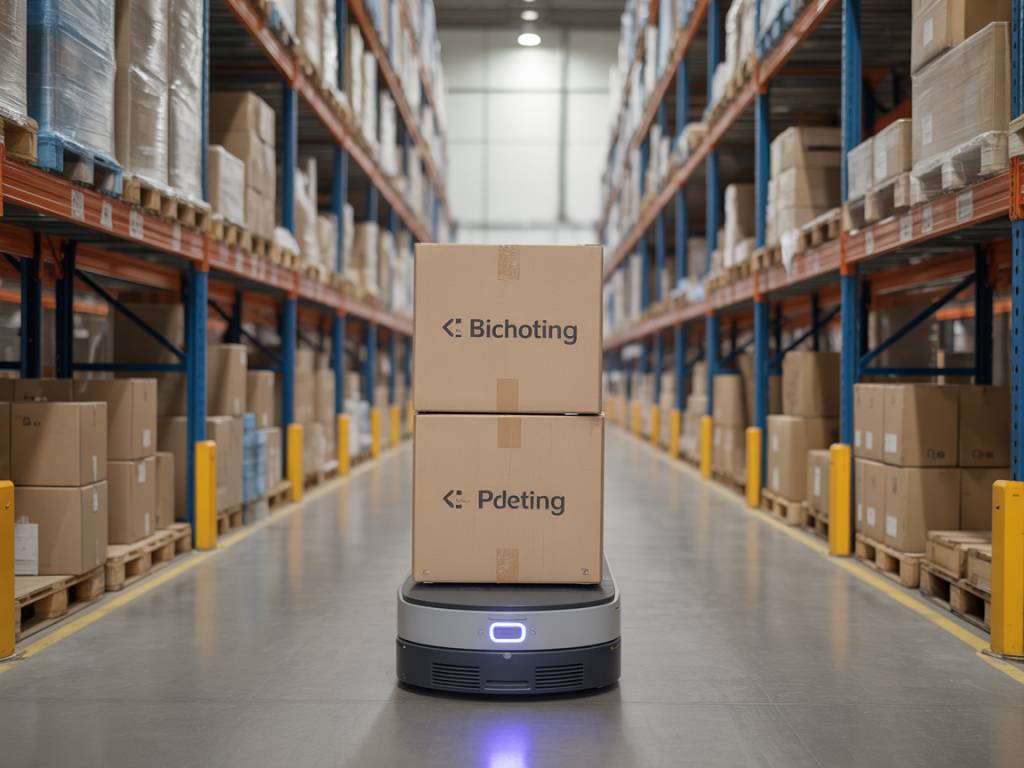
Collaborative picking robots: transforming warehouse order fulfillment
Collaborative picking robots are rapidly reshaping how modern warehouses operate. These “cobots” work side by side with human operators, supporting them in the most repetitive and time-consuming tasks of order picking. In a context of booming e-commerce, labor shortages and pressure on delivery times, collaborative picking robots are emerging as a key technology for efficient and resilient supply chain operations.
Unlike traditional industrial robots, which are usually confined behind safety fences, collaborative robots are designed to share the same workspace with humans. They navigate autonomously through aisles, bring shelves to operators, or follow pickers on their routes. They communicate in real time with warehouse management systems (WMS) and can adapt quickly to changes in demand or inventory. For logistics and supply chain professionals, this new generation of robotic solutions is opening a powerful lever for productivity, flexibility and safety.
What are collaborative picking robots in warehouse logistics?
Collaborative picking robots, also called “collaborative mobile robots” or “AMR picking robots”, are intelligent, mobile systems that assist human workers in order fulfillment tasks. They combine sensors, cameras, artificial intelligence and navigation software to move safely through a warehouse and interact with people and goods.
Rather than replacing human workers entirely, these robots are designed to complement their strengths. People handle complex decisions, exceptions and quality checks. Robots manage long walking distances, repetitive movements and heavy or bulky loads. This division of labor is at the heart of the “collaborative robotics” concept in intralogistics.
In practice, collaborative picking robots can take several forms and support multiple picking strategies. They can follow a picker, carry totes or cartons, guide operators via screens or lights, or bring entire racks to fixed packing stations. The core idea remains the same: reduce non-value-added tasks, shorten walking distances, and increase picking efficiency while maintaining high accuracy.
Main types of collaborative picking robots in warehouses
The collaborative robotics market in warehousing is diverse. Several types of picking robots can be found, each adapted to different layouts, product ranges and throughput requirements.
- Autonomous Mobile Robots (AMR) for assisted picking: These cobots move independently inside aisles and stop at the right storage locations. They indicate to the human operator what SKU to pick, how many units, and in which bin to place them. Once a mission is complete, they drive autonomously to another location or to a packing area.
- Goods-to-person robotic systems: Robots bring shelves, trays or racks to stationary pickers. This approach significantly reduces walking time. While not always “collaborative” in the strict safety sense, many of these systems integrate collaborative features, human-machine interfaces and shared work zones.
- Follow-me robots: These collaborative picking robots accompany human workers along their route. They can automatically follow a designated operator, stop when the picker stops, and move on as soon as the next location is reached. The goal is to eliminate the need to push manual carts or pallet jacks.
- Robotic arms mounted on mobile bases: More advanced solutions combine mobile robots with collaborative robotic arms. The arm can grasp items directly from shelves or bins, sometimes in combination with a human operator for complex tasks or exception handling.
Each category of collaborative picking robot offers different benefits in terms of productivity, investment and integration complexity. Choosing the right model depends on SKU profiles, order patterns, available space and the level of automation already in place in the warehouse.
Key benefits of collaborative picking robots for warehouse operations
Deploying collaborative picking robots in warehouses is not just a matter of image or innovation. It directly addresses some of the most pressing challenges in logistics and supply chain management today.
- Higher picking productivity: By reducing walking time and optimizing paths, collaborative robots help pickers process more order lines per hour. Robots can also work continuously over long shifts, supporting peaks such as seasonal or promotional events.
- Improved order accuracy: Robots are guided by real-time data from the warehouse management system. They can verify locations, quantities and barcodes, reducing mispicks and costly returns.
- Enhanced worker safety and ergonomics: Cobots take over the most physically demanding tasks. Fewer long walks, less pushing of heavy carts, and controlled lifting can significantly reduce musculoskeletal disorders and absenteeism.
- Flexibility and scalability: Unlike fixed conveyor systems, collaborative picking robots can be deployed progressively. Adding or removing robots according to demand is relatively simple, which is crucial for 3PL (third-party logistics) providers and e-commerce players dealing with variable volumes.
- Better use of data and analytics: Collaborative robots constantly generate data on flows, routes and performance. These insights help optimize warehouse layout, slotting and workforce planning.
From a business perspective, these benefits translate into lower cost per order, better service levels and higher customer satisfaction. They also offer a way to address labor shortages in many logistics markets, where finding and retaining warehouse workers has become increasingly difficult.
How collaborative picking robots integrate with WMS and warehouse processes
Successful deployment of collaborative picking robots depends heavily on software integration and process design. Robots do not operate in isolation. They are orchestrated by a WMS or a specialized orchestration layer that assigns tasks, prioritizes orders and monitors performance in real time.
Typically, the WMS manages order waves, inventory locations and stock levels. A robot management system, sometimes called a “fleet manager” or “robot control system”, translates these instructions into concrete missions for each robot. It determines which robot should handle which task, defines optimal paths and coordinates interactions with human pickers at shared workstations.
Human-machine interfaces play a critical role in this framework. Operators may receive instructions on handheld devices, on the robot’s screen, via voice picking systems, or through pick-to-light displays. The goal is to keep the workflow intuitive and frictionless, so that employees can quickly adapt to working with robots without long training periods.
Key use cases for collaborative picking robots in e-commerce and retail logistics
Collaborative picking robots are particularly relevant in environments where order profiles are fragmented and dynamic. E-commerce, omnichannel retail and spare parts distribution are typical examples.
- E-commerce order fulfillment centers: Online retailers face massive SKU assortments and highly variable order lines. Collaborative picking robots can support batch picking, zone picking or cluster picking strategies, helping reduce picking times while maintaining speed and accuracy.
- Omnichannel retail warehouses: Retailers must prepare orders for stores as well as direct-to-consumer shipments. Cobots enable them to adapt their picking strategies quickly, depending on whether orders are destined for click-and-collect, home delivery or store replenishment.
- Spare parts and aftermarket logistics: In industries such as automotive, aviation or industrial equipment, order lines are often small but highly diverse. Collaborative robots can navigate dense storage areas, support fast picking of small parts and assist technicians in kitting operations.
- 3PL and contract logistics providers: For third-party logistics operators, the ability to deploy and redeploy robots across sites is a strong competitive advantage. Collaborative picking robots allow them to offer flexible, scalable solutions to multiple clients without heavy fixed infrastructure.
Selection criteria when investing in collaborative picking robots
Investing in collaborative robots for picking is a strategic decision. Beyond the technology itself, companies must evaluate the overall impact on their supply chain, workforce and customer promise.
- Operational requirements and process fit: Before comparing robot brands, it is essential to map current and future picking flows. What are the typical order sizes? What is the SKU mix? What picking methods are in place? The chosen solution must integrate naturally into these patterns, or enable a clearly beneficial redesign.
- Safety and collaborative capabilities: True collaborative robots are equipped with sensors and safety features to detect humans and avoid collisions. Compliance with safety standards, ease of programming safe zones and speed limitations are critical aspects.
- Integration with WMS and existing IT infrastructure: Robust APIs, standardized connectors and proven integrations with leading WMS vendors reduce project risk and implementation time. The ability to manage mixed fleets of robots from different manufacturers is also becoming an important criterion.
- Total cost of ownership (TCO): Beyond the purchase price or leasing fees, businesses must consider installation, maintenance, software licensing, training and potential infrastructure changes. A clear ROI model, based on cost per pick or cost per order, is essential.
- Scalability and vendor roadmap: The collaborative robotics market is evolving quickly. Selecting a partner with a solid roadmap, strong support and the capacity to scale deployments across multiple sites is a key success factor.
Future trends in collaborative robotics for warehouse picking
The new frontier of order picking is not static. As artificial intelligence, computer vision and sensor technologies advance, collaborative picking robots are becoming more autonomous, more versatile and more connected.
One major trend is the integration of advanced vision systems to improve item recognition and handling. Robots will be progressively able to grasp a wider variety of products, including deformable or reflective items, with minimal human supervision. Another trend involves tighter synchronization between transport robots, picking robots and packing stations, to create end-to-end automated flows in fulfillment centers.
In parallel, software platforms are evolving towards unified orchestration of all warehouse resources, whether human, robotic or mechanized. In this scenario, collaborative picking robots become one asset among many, orchestrated in real time depending on priorities, cut-off times and capacity constraints.
For logistics and supply chain leaders, the strategic question is no longer whether to adopt collaborative picking robots, but how to integrate them intelligently into a broader vision of warehouse automation and digital transformation. Those who manage this shift early and thoughtfully will be better positioned to handle growth, volatility and rising customer expectations in the years ahead.