
 Jeremy
 Autonomous inventory robots are no longer a futuristic concept reserved for experimental warehouses. They are quietly, but rapidly, transforming inventory counting and stock management in logistics operations of all sizes. By combining advanced robotics, computer vision, and AI-based analytics, these inventory robots are redefining how warehouses track stock levels, detect discrepancies, and optimize storage. For supply chain leaders, the shift from manual, paper-based, or handheld-scanner inventory counts to automated stock counting is becoming a key axis of digital transformation.
What are autonomous inventory robots in warehouse management?
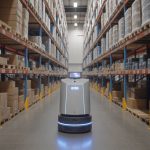
Autonomous inventory robots are mobile robots designed specifically to navigate warehouse aisles and perform automated inventory counting. They typically integrate sensors, cameras, laser scanners (LiDAR), and embedded AI to identify products, scan barcodes or RFID tags, and compare actual stock with data stored in the warehouse management system (WMS).
Unlike traditional automated systems, these robots do not require fixed infrastructure such as conveyor belts or static scanning gates. They move independently, avoid obstacles, and adapt to changing layouts. In many operations, they are deployed during off-peak hours or night shifts, turning “dead time” into a productive inventory control window.
For logistics and supply chain professionals, this means inventory visibility can shift from periodic and partial to continuous and granular.
How inventory robots work: sensors, AI and integration with the WMS
The value of autonomous inventory robots lies in the combination of hardware and software. Each robot is a mobile data collection platform, capable of scanning thousands of locations faster than a human team.
Key technologies typically used include:
- Computer vision and cameras to read barcodes, QR codes, labels, and sometimes even recognize packaging or SKUs via image analysis.
- LiDAR and 3D sensors to map the warehouse, detect shelves, and navigate narrow aisles safely.
- RFID readers for contactless identification of tagged products, pallets, or bins.
- Onboard processors and AI algorithms to interpret what is seen, correct reading errors, and compare observed stock with expected quantities.
Most autonomous inventory robots are connected to the warehouse’s WMS or ERP via APIs. After each inventory mission, the robot uploads detailed data: stock levels per bin location, missing items, ghost stock, misplacements, and even quality issues such as damaged labels. This near real-time feedback loop allows inventory managers to act faster on discrepancies, instead of waiting for the next annual or cycle count.
From manual inventory counting to robotic stock control
Traditional inventory counting in warehouses is labor-intensive, repetitive, and prone to error. Teams often need to stop operations, freeze stock movements, and mobilize many operators to scan or count pallets and cases. The process can take hours or days, depending on the warehouse size and product variety.
Autonomous inventory robots change this paradigm. They enable continuous or high-frequency stock checks without disrupting operations. Robots can move through aisles while other activities continue, provided safety protocols are respected. They work nights, weekends, or early mornings, feeding the system with accurate data by the time human teams start their shift.
This shift reduces the need for large “all hands” inventory campaigns. Instead, cycle counting becomes automated, distributed, and more flexible. The result is a smoother workload for warehouse staff and more consistent inventory accuracy over time.
Key benefits of robotic inventory management for warehouses
The impact of autonomous inventory robots on logistics and supply chain performance can be substantial. The most cited benefits include:
- Higher inventory accuracy: Robots can repeatedly scan the same locations with precision, reducing human counting errors and missed items.
- Increased frequency of counts: What was previously done monthly or annually can now be done weekly, daily, or even continuously.
- Reduced operational disruption: Inventory tasks are shifted to low-activity periods, minimizing the need to stop picking or receiving.
- Labor reallocation: Staff can be reassigned from low-value, repetitive counting tasks to more complex, value-adding activities such as problem-solving, quality control, or process improvement.
- Faster detection of discrepancies: Differences between physical stock and system data are identified quickly, limiting the impact on order fulfillment and customer service.
- Enhanced traceability and compliance: Regular, automated records support audits, regulatory requirements, and internal quality standards.
For many warehouse operators, the return on investment is driven not only by labor savings but also by fewer stockouts, fewer shipping errors, and improved service levels.
Use cases: where autonomous inventory robots bring the most value
Robotic inventory counting is relevant in a wide variety of sectors, but certain environments benefit more strongly from automation.
- Large distribution centers and e-commerce warehouses where SKU counts are high, turnover is rapid, and manual cycle counting becomes prohibitively time-consuming.
- Retail distribution networks needing precise stock levels to reduce overstock and avoid stockouts across multiple stores or fulfillment centers.
- Pharmaceutical and healthcare logistics where inventory accuracy and traceability are critical to patient safety and regulatory compliance.
- Industrial spare parts warehouses managing tens of thousands of references, many with low rotation but high criticality.
- 3PL and contract logistics providers where multiple customers share space and systems, requiring a high level of transparency and service quality.
In each of these environments, autonomous inventory robots provide a standardized, repeatable process for stock control, reducing dependency on individual experience or manual discipline.
Robotic inventory counting and data quality in the supply chain
The quality of inventory data is a perennial challenge for supply chain management. Forecasting, replenishment, slotting, and transport planning all depend on reliable, up-to-date stock information. When the data is wrong, everything downstream is affected: picking errors, missed deliveries, emergency shipments, and frustrated customers.
By automating stock counting at the shelf or pallet location, inventory robots contribute to a more robust data foundation. They detect mismatches between the digital and physical world early. Over time, this helps companies identify recurring process issues: inconsistent labeling, frequent picking errors in certain aisles, or systematic issues with returns and put-away.
In this sense, autonomous inventory robots are not just tools for counting. They become instruments of process diagnostics and continuous improvement in warehouse operations.
Challenges and limitations of autonomous inventory robots
Despite clear benefits, the deployment of inventory robots is not without obstacles. Organizations must consider several factors before investing.
- Initial investment and ROI: Purchasing or leasing robots and integrating them with existing WMS or ERP systems requires capital and time. ROI depends on warehouse size, labor costs, error rates, and operational complexity.
- Infrastructure readiness: Poorly organized or unstable shelving, inconsistent labeling, or lack of standard locations reduce the effectiveness of robotic inventory counting.
- Change management: Operators may initially see robots as a threat rather than a support tool. Clear communication, training, and involvement in the deployment process are essential.
- Technical limitations: Dust, poor lighting, reflective surfaces, or damaged barcodes can affect scanning quality. Some environments may require hybrid approaches combining human and robotic checks.
- Cybersecurity and data integration: As with any connected device, inventory robots expand the surface of potential cyberattacks and require secure integration with IT systems.
These challenges are manageable but must be included in the deployment roadmap. A realistic pilot phase, combined with clear KPIs, is often the best way to validate the business case and fine-tune processes.
How to prepare your warehouse for robotic stock counting
For warehouse managers considering autonomous inventory robots, preparation is as important as technology selection. Several practical steps can facilitate adoption.
- Standardize location naming, signage, and labeling across aisles and storage zones so that robots and systems interpret data consistently.
- Improve housekeeping and visual management, ensuring aisles are clear and that pallets and cases are properly aligned within locations.
- Review barcode and RFID practices, including label quality, placement, and durability.
- Map high-priority areas where automated inventory control will deliver the fastest impact, such as fast-moving SKUs or critical spare parts.
- Define workflows for discrepancy management: what happens when the robot detects a variance, who validates, and how adjustments are made in the WMS.
Finally, involve IT, operations, and, where relevant, procurement and finance from the start. Robotic inventory counting is not only an operational upgrade; it is a strategic decision affecting data governance, investment planning, and even customer contracts.
Choosing an autonomous inventory robot solution
The market for inventory robots is growing, with specialized vendors as well as broader logistics automation providers entering the space. When evaluating solutions, warehouse and supply chain leaders typically focus on several criteria:
- Scanning performance: speed, accuracy, and ability to read different types of labels, heights, and packaging.
- Navigation capabilities: robustness in narrow aisles, high-density storage, or mixed-traffic environments.
- Ease of integration: compatibility with existing WMS, ERP, and automation systems; availability of APIs and connectors.
- Scalability and fleet management: capacity to manage multiple robots, coordinate missions, and prioritize critical zones.
- Support and maintenance: availability of local support, spare parts, and software updates.
- Business model: purchase, leasing, or Robotics-as-a-Service (RaaS), which can reduce upfront investment and align costs with usage.
For some companies, a pilot with a limited number of robots in one warehouse acts as a test bed before larger-scale deployments across a network of distribution centers or fulfillment hubs.
Autonomous inventory robots as a pillar of the smart warehouse
As robotics, AI, and IoT converge, the warehouse is evolving into a connected, data-driven environment. Autonomous inventory robots fit naturally into this “smart warehouse” vision. They feed high-quality stock data into digital twins of the warehouse, support advanced analytics, and enable more accurate planning and orchestration of resources.
In combination with autonomous mobile robots for picking, automated storage and retrieval systems, and predictive analytics, robotic inventory counting closes a crucial gap: the continual validation of what is physically available versus what the system believes is available. For companies seeking to increase resilience, agility, and customer satisfaction in their supply chains, this capability is rapidly moving from optional to strategic.
In the coming years, the question for many logistics operations will no longer be whether to automate inventory counting, but how to integrate autonomous inventory robots in a way that maximizes value, supports the workforce, and creates a more transparent, efficient warehouse ecosystem.