 Jeremy
 Autonomous loading robots are becoming a practical answer to one of the most persistent pressure points in modern logistics: the dock. In warehouses, distribution centers, and cross-docking facilities, the speed and consistency of receiving and shipping operations can determine whether a supply chain remains fluid or becomes congested. Dock automation is no longer limited to conveyor systems, dock levelers, or software for appointment scheduling. Today, it increasingly includes autonomous loading robots, mobile robotics, and automated material handling technologies designed to move goods with less manual intervention.
This shift matters because the dock is where goods enter and leave the facility. It is also where delays become visible very quickly. A late trailer, a poorly staged pallet, or a slow manual loading process can affect labor productivity, carrier turnaround time, and order fulfillment performance. Autonomous loading robots help address these issues by reducing repetitive handling, improving throughput, and making receiving and shipping operations more predictable.
What autonomous loading robots are and how they work
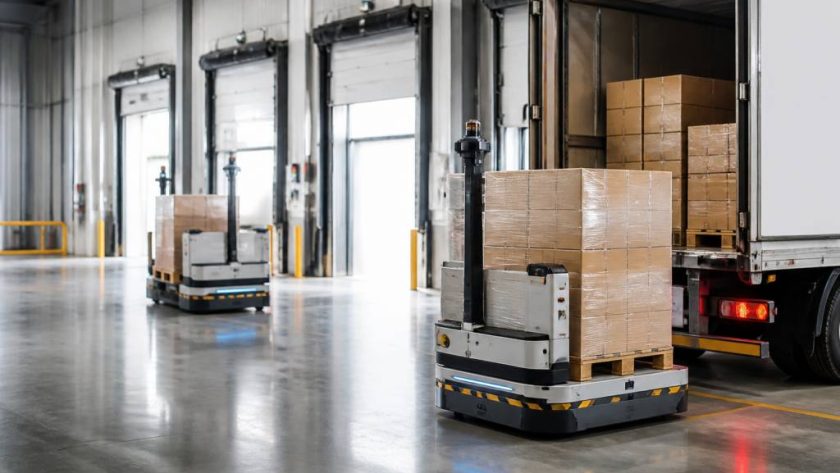
Autonomous loading robots are robotic systems designed to move cargo between a warehouse and a truck, trailer, or container with minimal human control. They can handle pallets, totes, cartons, and other standardized load units depending on the configuration. In many setups, these robots navigate using sensors, mapping technologies, vision systems, and advanced control software. Some operate as mobile platforms that transport loads from staging areas to the dock. Others are integrated into automated dock systems and work alongside conveyors, stretch wrappers, pallet shuttles, or warehouse control software.
The main objective is simple. Move goods faster, safer, and more consistently. Yet the technology behind that goal is sophisticated. Autonomous navigation, obstacle detection, load stabilization, and system communication all need to function in real time. The robot must understand its environment, avoid collisions, and coordinate with the dock workflow. That coordination is what makes autonomous loading automation especially valuable in busy facilities.
Unlike traditional manual loading, which depends heavily on labor availability and physical effort, autonomous systems can operate with a higher level of repeatability. They reduce variability. They also create a more structured flow between receiving, putaway, staging, and outbound dispatch.
Why dock automation is becoming a strategic priority
The dock is one of the most labor-intensive areas of the supply chain. It is also one of the most time-sensitive. When inbound and outbound traffic increases, manual loading and unloading often become bottlenecks. This is particularly true in e-commerce fulfillment, retail distribution, food logistics, and industrial supply chains where throughput expectations are high.
Dock automation helps solve several operational challenges at once. It reduces the number of manual touches per unit handled. It shortens trailer dwell time. It improves trailer utilization. It can also support 24/7 operations by reducing dependence on shift-based labor alone. For facilities managing tight delivery windows, these gains are significant.
In many warehouses, the problem is not only speed. It is consistency. A loading process that varies from shift to shift, or from team to team, is harder to plan and harder to optimize. Autonomous loading robots improve standardization. That standardization supports better scheduling, better forecasting, and better service levels.
How autonomous loading robots accelerate receiving flows
Receiving operations often start with uncertainty. The arrival time may shift. The trailer may not be perfectly staged. The inbound volume can fluctuate by hour or by day. Autonomous loading robots help stabilize this part of the workflow by quickly transferring goods from the dock to a staging or storage location.
In practice, this means less idle time at the door. It means fewer manual trips between the dock and the receiving area. It also means operators can focus on verification, quality checks, and exception handling rather than repetitive transport tasks. When goods arrive in pallets or standardized containers, robots can move them directly to a designated area with precision. This speeds up the receiving process and reduces congestion at the dock face.
Another advantage is visibility. Many autonomous loading systems are connected to warehouse execution systems or warehouse management systems. This allows the facility to track the movement of inbound goods in real time. Managers can see where bottlenecks are forming. They can adjust staffing, staging, or slotting strategy accordingly. That level of operational insight is difficult to achieve with manual handling alone.
How autonomous loading robots improve shipping operations
Outbound shipping is often under even greater time pressure than receiving. Orders must be picked, staged, consolidated, and loaded on time. Missed cutoffs can affect customer service, carrier schedules, and network performance. Autonomous loading robots help streamline this final stage by reducing the time required to move finished orders from staging areas into trailers or containers.
In shipping operations, speed is important, but so is loading quality. Poorly loaded trailers can lead to damage, instability, or inefficient use of space. Autonomous systems can help create more repeatable load patterns when integrated with loading algorithms, pallet sequencing software, or warehouse control systems. This improves cube utilization and can reduce the number of partially filled shipments.
For high-volume operations, the impact can be substantial. Robots can support continuous flow during peak periods. They can reduce the strain on warehouse labor during seasonal surges. They can also minimize errors associated with fatigue or rushed manual work. In environments where every minute counts, that reliability is a major advantage.
Key benefits of autonomous loading and dock automation
- Faster trailer loading and unloading times
- Reduced manual labor and lower ergonomic risk
- Improved dock throughput and shorter dwell times
- Better use of warehouse space through more organized staging
- More consistent handling of pallets, totes, and cartons
- Enhanced visibility through integration with digital systems
- Greater resilience during labor shortages or peak demand periods
- Lower error rates in repetitive dock movements
These benefits are often interconnected. Faster loading can improve throughput. Better throughput can reduce congestion. Reduced congestion can improve safety. And better safety can improve labor retention. For many operations, the return on investment comes from multiple small gains rather than one dramatic change.
Safety and ergonomics in autonomous dock operations
Dock work is physically demanding. Workers lift, push, pull, and maneuver heavy loads in a busy environment with trucks, forklifts, and pedestrians moving nearby. That combination creates risk. Autonomous loading robots can reduce the amount of strenuous manual handling required at the dock, which is one of the strongest arguments for adoption.
Safety, however, depends on proper system design. Robots must be equipped with reliable detection and stopping mechanisms. Facilities need clear traffic rules. Human-robot interaction should be designed carefully, especially in mixed environments where employees still work alongside automated systems. The goal is not to eliminate people from the dock. It is to move them into higher-value tasks while reducing exposure to repetitive and hazardous movements.
Ergonomics matter as well. Repetitive loading tasks contribute to fatigue and injury risk. By shifting heavy transport to autonomous systems, facilities can improve working conditions. That can also support retention in a sector where labor shortages remain a constant issue.
Integration with warehouse management systems and smart logistics
Autonomous loading robots perform best when they are part of a broader digital ecosystem. Integration with warehouse management systems, warehouse execution systems, transport management systems, and dock scheduling software allows the automation layer to respond dynamically to demand.
For example, a system may prioritize inbound pallets that are needed urgently for same-day putaway. It may direct outbound loads based on carrier departure times. It may also coordinate with conveyor lines or automatic identification systems to ensure that each load is sent to the right destination. This digital orchestration is a defining feature of modern smart logistics.
Data is another major advantage. Every movement can generate useful operational information. How long did the load wait at the dock? Which trailer was completed first? Where do delays occur most often? These insights support continuous improvement and can guide future investments in automation.
Industries adopting autonomous loading robots
Autonomous loading robots are gaining traction across several sectors. In e-commerce and retail distribution, they support fast order turnover and high shipment volumes. In food and beverage logistics, they help maintain product flow while reducing handling time. In manufacturing, they can support internal logistics and outbound distribution. In pharmaceutical and healthcare supply chains, precision and traceability make automation especially attractive.
Cold chain operations are another promising area. Reducing the time that goods spend at the dock can help protect product integrity. When speed and temperature control are both important, automated loading can be particularly valuable.
Each industry has its own operational constraints. Still, the common need is clear. Faster, safer, and more reliable dock movement creates a competitive advantage.
What to consider before investing in autonomous loading equipment
Before buying autonomous loading robots or related dock automation solutions, facilities should assess their load profiles, trailer types, throughput requirements, and building layout. Not every operation is ready for full automation. In some cases, a hybrid approach is more effective. That may mean automating only certain lanes, only inbound receiving, or only repetitive pallet moves.
Compatibility is critical. The robot must fit the load dimensions and the physical environment. Dock height, floor condition, aisle width, and staging space all influence system performance. Software integration is equally important. If the automation cannot communicate with existing systems, the operational benefits will be limited.
Buyers should also evaluate service support, maintenance requirements, and scalability. A system that works well today should be able to grow with future demand. In logistics, flexibility is often as important as raw speed.
The future of automated dock loading in supply chain operations
As supply chains continue to face pressure from labor shortages, rising service expectations, and cost constraints, autonomous loading robots are likely to become more common. They fit a broader trend toward automated material handling, intelligent warehouse systems, and data-driven logistics. The dock, once seen as a purely manual transition zone, is becoming a connected and optimized part of the network.
Future developments will likely focus on smarter navigation, better load recognition, stronger integration with planning systems, and greater adaptability to mixed SKUs and variable packaging formats. The most advanced solutions will not only move goods. They will coordinate the flow of goods across the entire receiving and shipping process.
For companies evaluating warehouse automation, autonomous loading robots offer a practical route to faster dock operations and more resilient supply chain performance. They help reduce friction where inbound and outbound flows meet. And in logistics, reducing friction is often the fastest way to improve everything else.